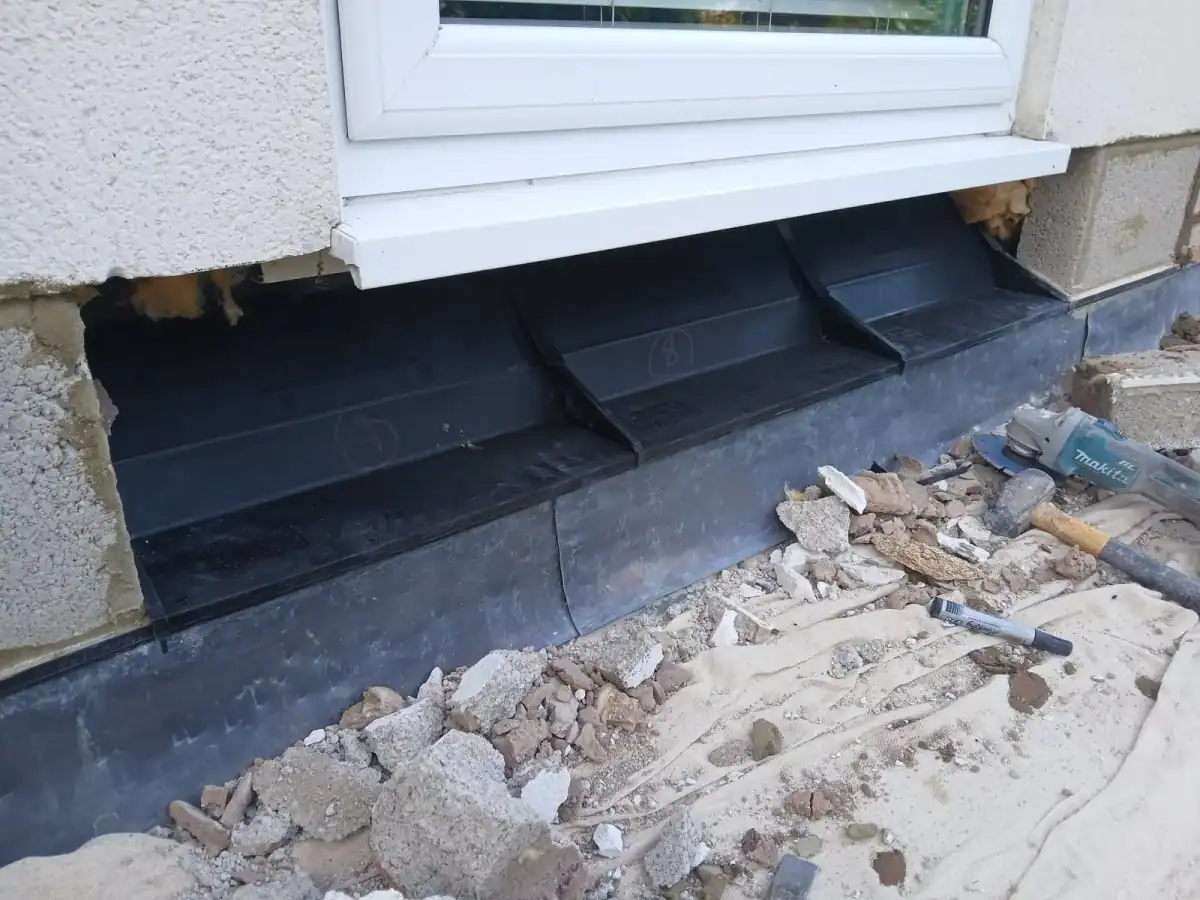
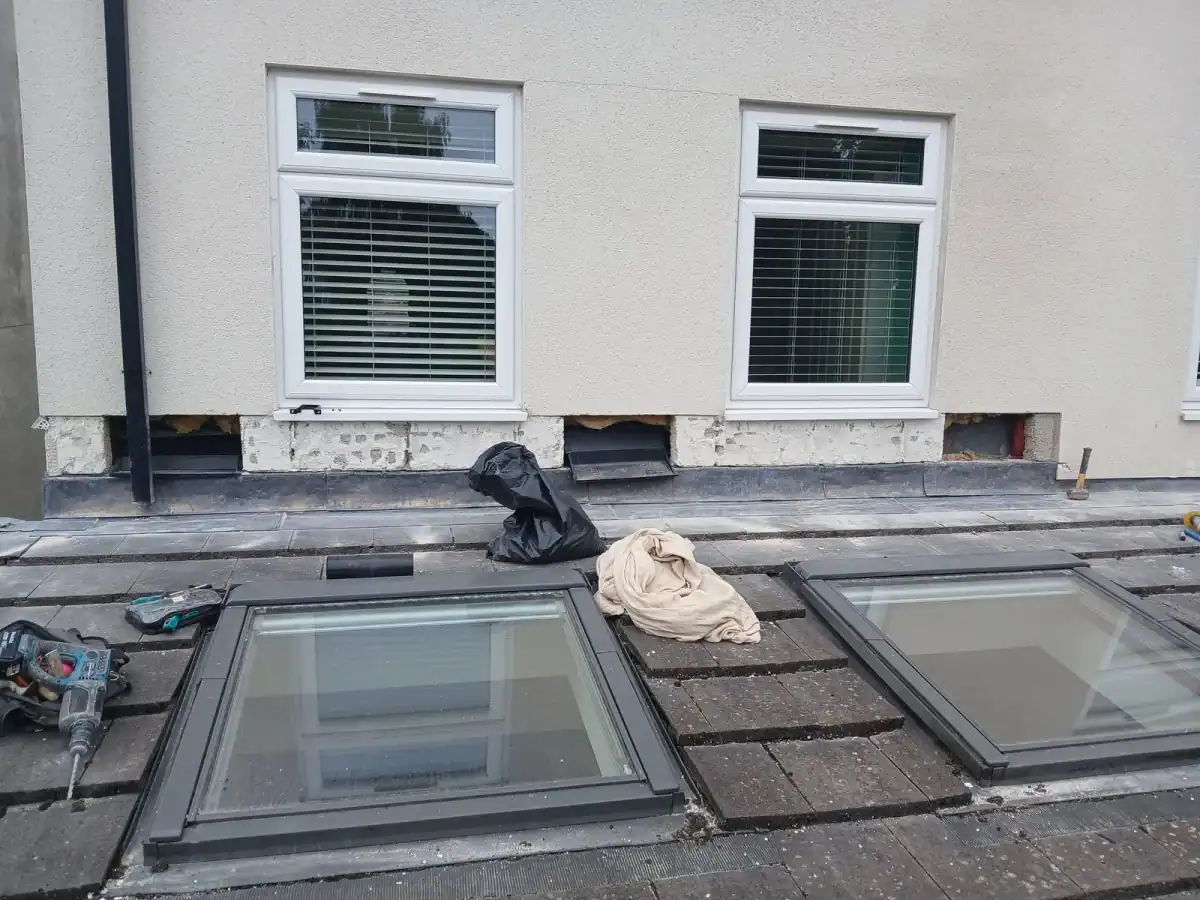
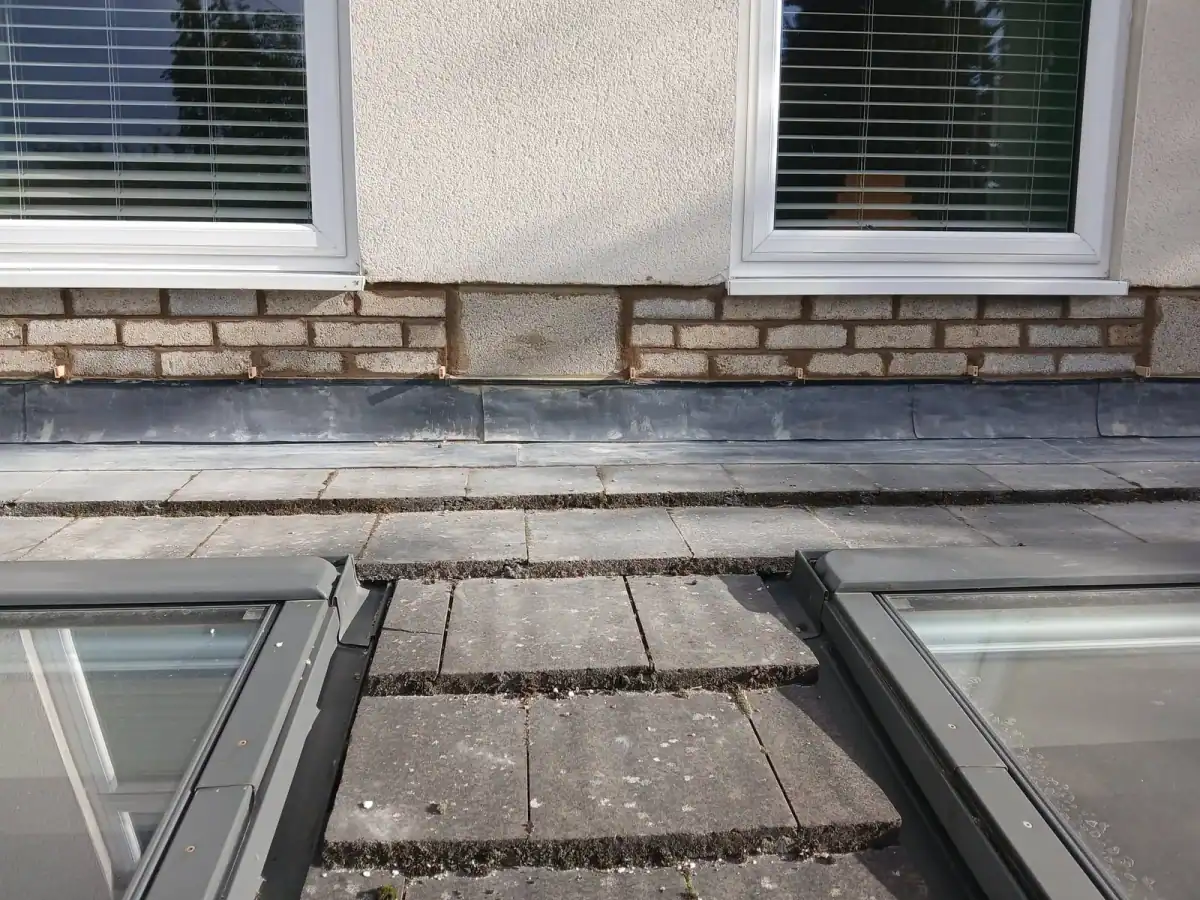
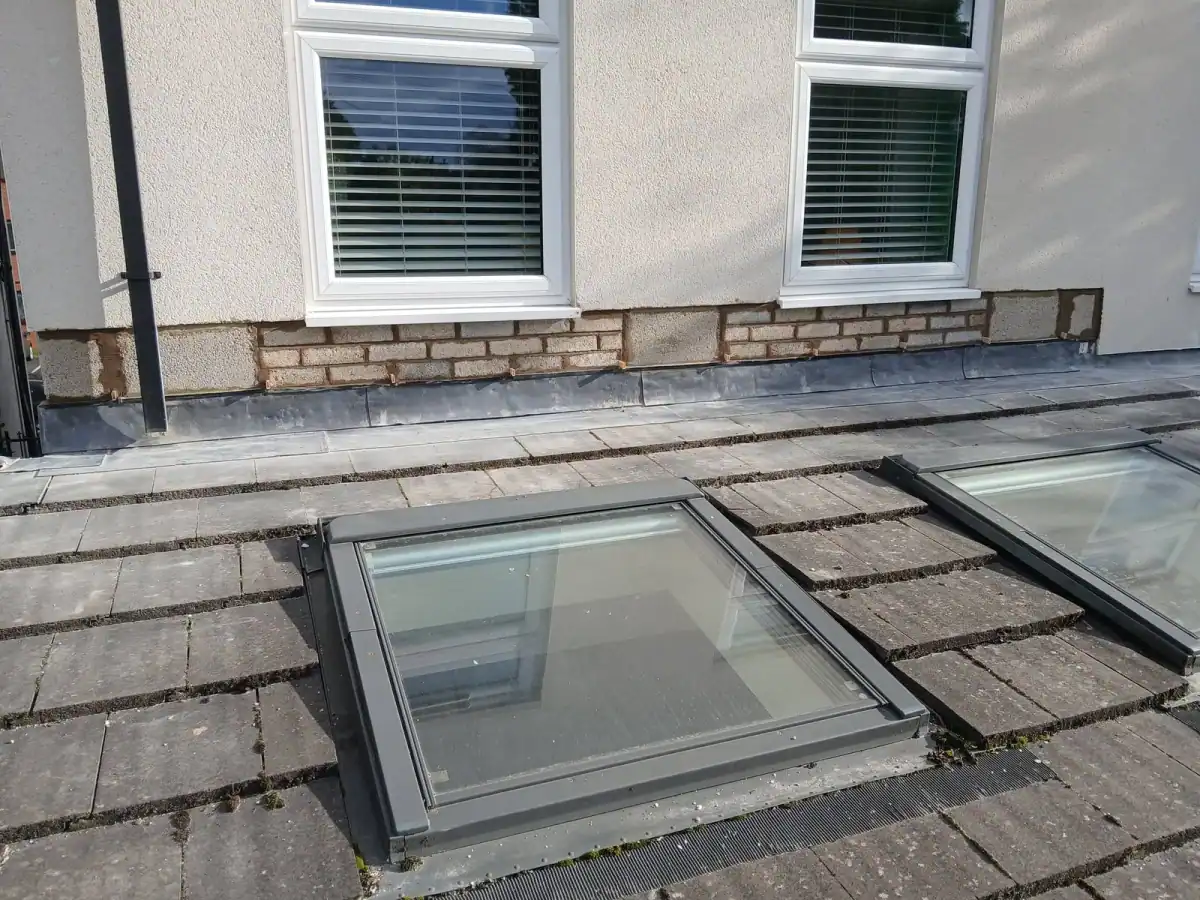
This job in Harborne, Birmingham was an NHBC warranty repair. Water had been getting in where the rear roof abuts the main house, so I retrofitted Type E cavity trays at the junction and corrected the existing lead flashing.
The problem: water ingress where a roof meets a wall
Where a lower roof joins a higher wall, two details do most of the work of keeping water out. The lead flashing sheds rainwater from the roof, and a cavity tray catches anything that gets into the wall and sends it back out. If either one is missing or not right, water can find its way into the building. Here, the problem was water ingress at the rear roof junction.
The repair: retrofit cavity trays and corrected lead flashing
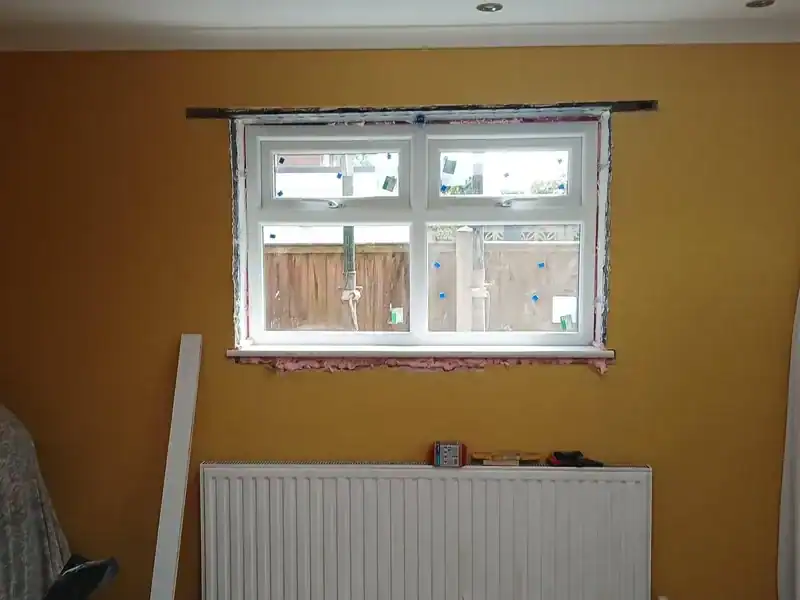
I retrofitted Type E cavity trays and corrected the existing lead flashing. To get the trays in, openings were cut along the base of the wall above the flashing, and the blockwork was rebuilt once the trays were in place. You can see each stage in the photos.
Completed over three visits
The work was completed over three visits to make sure it was carried out safely. Working in stages like this is how I keep a job of this kind under control. Another brickwork repair completed to help protect the property from water ingress.
Water coming in where a roof meets a wall?
Damp patches or staining on a wall or ceiling near the point where a lower roof joins a higher wall can be a sign of a problem at that junction. If that sounds familiar, send me a photo on WhatsApp and I will give you a quick, no-obligation assessment. I cover Harborne, the rest of Birmingham and the wider West Midlands.
More photos from this job
Need something similar?
Send me a photo and I will give you a quick, no-obligation assessment and a fair quote.
Related service: Water ingress and masonry related issues